

Toothlessness ages the face? What changes when the smile loses support
He’s reviewing old photographs and something catches his eye, but it’s not a wrinkle. It’s the mouth. The lips seemed to have another support, the smile occupied the face in a different way, and the person in the photograph seemed to have another expression.
Does toothlessness age the face? The short answer: it can, especially when many or all teeth are missing, but it is not automatic and does not explain everything. A missing tooth does not age the face from one day to the next, and placing implants does not erase ten years.
What is worth it is to realize what has changed in the mouth before attributing everything to age, and before deciding on any treatment.
Contents approached
Why is it said that toothlessness ages the face?
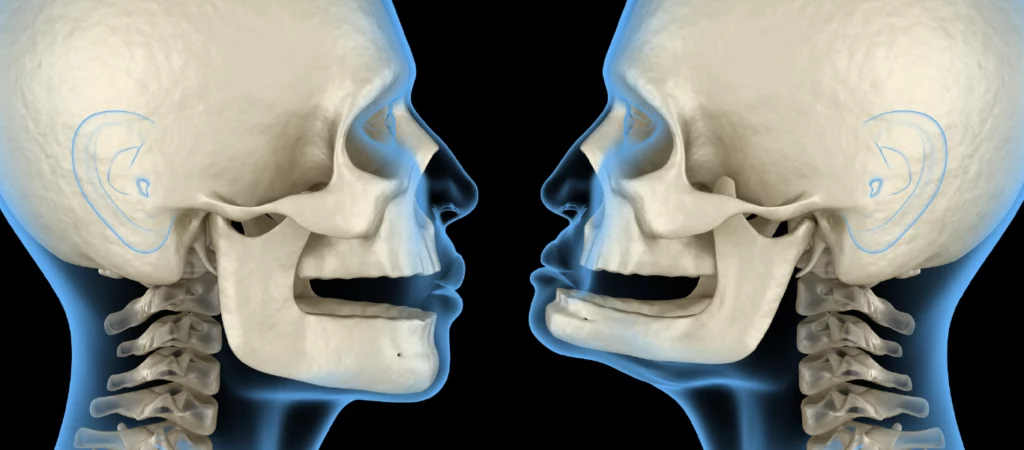
Teeth are not only for chewing and to appear in the smile. Together with the tissues that surround them, they participate in the support of the mouth region, a bit like the structure that holds an outstretched tent.
What changes in the lip support?
When the loss is extensive, the lips may be less supported and the contour of the mouth changes. Tooth replacement can help to recover some of that support.
It also counts how the top and bottom teeth meet. In extensive losses, sharp wear or old prostheses, the dentist evaluates the vertical dimension of the occlusion, that is, the height between the jaws when the teeth contact.
It is not measured by the impression that “the face is more closed”: it requires observing the mouth and function. A photograph can motivate a question, but it does not decide a treatment.
Tooth loss and facial aging: the role of bone
The empty space is just the part you see. After losing a tooth, the bone in the area can lose volume over time. In those who use removable prosthesis, this helps to explain why a prosthesis that was previously firm begins to become loose.
Here is an important difference between the solutions. The dental implant attaches to the bone and, when chewing, gives it the strength that was previously done by the root of the natural tooth. This helps preserve bone volume in the area where it was placed. The removable prosthesis rests on the gum and does not transmit this force to the bone. Over the years, the bone tends to continue to lose volume and the prosthesis stops adjusting, needing overbases or replacement. With less bone, the lips and cheeks have less support, which is why the face may appear more recessed around the mouth.
This does not mean that the implant is always the best option. It depends on the bone available, the health of the gums, overall health and what each person wants.
And the loss of support can start before the tooth falls out. Periodontitis damages the bone and tissues holding teeth, causes mobility and in advanced stages tooth loss. So, when faced with bleeding gums, receding gums, or drowning teeth, the first question should not be “What implant am I putting in?” , but “what can we still preserve?”
You can learn more about this topic in periodontitis and general health.
Missing a back tooth: does it matter?
It’s a back tooth, you can’t tell.” It’s one of the most heard phrases when a molar is missing, and it’s true that it might not appear in a photograph. But that doesn’t mean it’s not necessary.
The absence of a molar can affect chewing, and remaining teeth may change position over time. The consequences of a missing tooth are not just aesthetic.
Still, losing a single back tooth does not necessarily cause a visible change in the entire face: it depends on the location, the extent of loss and the situation of the remaining teeth. See also lack of teeth and chewing.
Wrinkles: what about teeth and what about skin?
The skin changes over time: it loses elasticity, becomes thinner, and factors such as sun exposure and smoking matter a lot. Therefore, a more marked line near the mouth or a change in the contour of the lips does not prove that there is a lack of dental support. There are often several factors at once.
This distinction is important to create realistic expectations: recovering teeth and function is not the same as treating all facial aging changes. Dentistry should respond to the problem that has been identified, and not promise rejuvenation.
What if the teeth are there, but they seem shorter?
The skin loses elasticity over time, and the sun and tobacco count, so a line near the mouth does not prove lack of dental support.
Recovering teeth and function is not the same as treating all facial aging, and dentistry should not promise rejuvenation.
Is your denture still well fitted?
A prosthesis can be whole and no longer accompany the mouth. The tissues where it sits change and the teeth of the prosthesis themselves wear out. If it starts to move during speech, makes chewing difficult or causes pain, it deserves review.
A well-adapted prosthesis can help regain support in a specific area around the mouth. It’s different from promising a younger face, and it’s worth having expectations be realistic from the first appointment.
Does restoring support always involve implants?
No. When teeth are missing, there are several possibilities: bridges, removable dentures, and implant-supported rehabilitations. There is no single solution for every mouth, and the choice depends on present teeth, oral health and each person’s expectations.
Implants are supports inserted into the bone, on which crowns, bridges or prostheses are placed. Therefore, the evaluation includes general health and medication: bone drugs such as bisphosphonates or denosumab may condition the decision and should always be referred to. When many or all of an arcade’s teeth are missing, a fixed prosthesis can be assessed over implants, but the decision is not just “fixed” or “removable”: you need to plan tooth position, lip relationship, chewing and maintenance.
And treatment does not end on the day of placement. Implants and prostheses need hygiene and monitoring, because plaque accumulation can cause disease around the implants and compromise their stability.
Before changing the smile, what to take to the consultation?
- One less tooth does not age the face alone, and no treatment erases a decade. But noticing what has changed in your mouth is always the best starting point.
In the consultation, it is worth explaining more than what you see in the mirror: whether you have avoided certain foods, if the prosthesis moves, feel different teeth when closing your mouth or noticed mobility. It is this information that guides the assessment.
Planning considers the teeth that can be maintained, the condition of gums and bone, previous treatments, and your overall health. And it should be remembered that losing teeth is not a natural part of aging. The goal does not have to be to look like someone else or return to the face of an old photograph: it can be to chew again with comfort, speak without fear that the prosthesis moves and recognize oneself in one’s own smile.
If you have lost your teeth or feel that your prosthesis no longer meets your needs, book an evaluation at A Clínica Dr. Pedro Mota in Vila Franca de Xira.
This article is for informational purposes and does not replace an individual clinical evaluation. Treatment options and outcomes depend on the individual’s situation.
Seek expert help
Will be evaluated by the specialist dentist in our clinic. We listen to your needs and plan your treatment according to your wishes. In our clinic, we do not sell treatments, we return smiles.
We plan the smile, clarify your doubts and execute with precision.
You may be interested in:

Toothlessness: have you ever stopped being able to crack an apple?
Do you have difficulty chewing? A lack of teeth can affect your diet and digestion. Learn how to regain comfort with oral rehabilitation.

The dream commands life: from poetry to healthy smile
The dream commands life.” António Gedeão inspires generations and reminds us that the simplest desires, like a healthy smile, transform!

Dental implant lasts forever? Discover the truth and how to care for your smile in autumn of life
The mouth of the human being faces changes as a season is, without the charm of mother nature. A dental implant lasts forever and solves this transformation that overshadows smiles.

Is a dental appliance with an implant a possible combination?
The dental appliance with implant is not an incompatibility. Let’s explain what happens when orthodontics and implantology intersect.