


How tobacco affects your teeth. What you can do before it’s too late
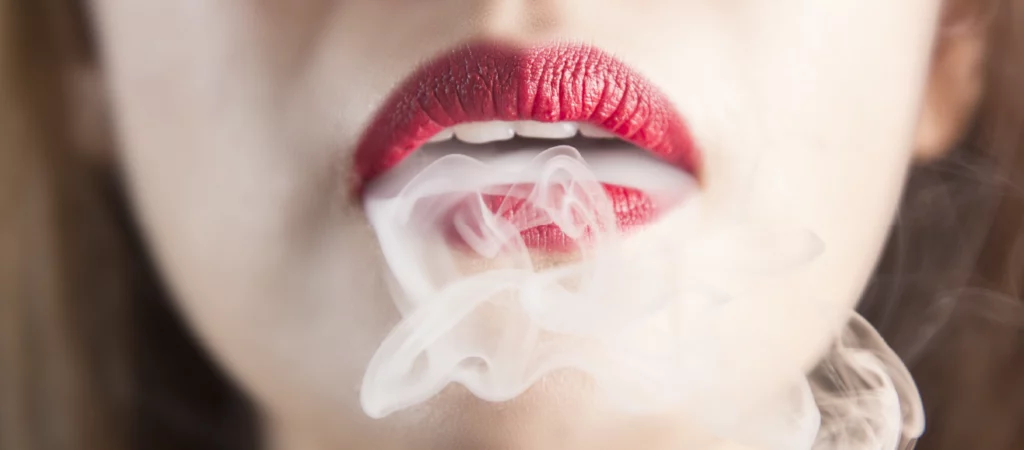
There are mouths that tell stories that people do not have the courage to say aloud, highlighting how tobacco affects teeth.
These are stories of habits that began by impulse, of cigarettes that fit so well into the routine that they became invisible, of attempts to stop that were lost between difficult days. But the truth is that tobacco has never gone unnoticed, it was just silent.
In the mouth, leaves deep marks. Some are seen in the mirror; others only the dentist can read.
And that’s almost always how we realize that something has changed: a tooth that darkened too quickly, that new sensitivity, the gum that “came down”, the bad breath that doesn’t go away, the impression that the teeth are no longer as firm as before.
It is at this moment that the question arises that many patients ask in their first visit to the clinic:
“Am I still in time?
As a word of comfort and courage and encouragement we can say: yes, it is still time, but it is not worth waiting any longer because, after all, the more time passes, the more it is wasted, and it is not only a matter of money, as you will realize with this article.
Contents approached
When tobacco enters the mouth, it starts a fight for survival
The consequences of smoking on oral health
He smokes by habit, by stress, by socialization. But the mouth does not smoke, it supports: nicotine, tar, heat, complete alteration of the bacterial environment.
In this vicious cycle the mouth responds as it can.
When we are a smoker, there are a number of consequences that clinical experience has proven over the years. Among them we highlight:
- Teeth become darker, sometimes almost overnight, and stains appear on the teeth caused by tobacco
- Breath changes because bacteria change
- The gums retract as if one retreats to protect oneself and periodontal diseases appear
- The bone holding teeth loses strength
- Small infections become serious problems
- The wounds do not heal as they should
- oral cancer
These are some of the consequences of tobacco on oral health, documented by decades of international studies and widely disseminated by the World Health Organization (WHO) and the Order of Dentists (OMD). But there’s more you can see in this OMD video.
More recent WHO studies warn that “the world is smoking less. According to the report, the number of people who use tobacco fell from 1.38 billion in 2000 to 1.2 billion in 2024, a relative 27% reduction since 2010. Still, one in five adults remains dependent on the product, perpetuating one of the planet’s leading causes of preventable death.”
But behind this scenario, there is a harsher reality:
👉 no one deserves to stop smiling in shame!
👉 No one should lose teeth because they think “it’s already too late”!
👉 No one should live in fear of speaking!
And this is where the good part of this story begins.
Even after smoking, and seeing how tobacco affects the teeth, the smile can be reborn
Some people think that smoking has left irreversible damage. But dental medicine evolved faster than tobacco was able to destroy and today the cutting edge technology, such as we use in A Clínica, and advances in dental medicine allow to contradict this idea.
Today, a patient with a history of smoking can:
- Recover color with tooth whitening for smokers
Not magic, science. The stains on teeth caused by tobacco can be removed or significantly reduced with professional treatments that reach where the toothbrush will never reach. The smile regains its radiance, and this changes everything: confidence, self-esteem, even motivation to take better care of oneself. - Rebuild form, harmony and aesthetics
When the enamel is already damaged, when the color does not fully respond, or when the weather has left more severe marks, dental aesthetic rehabilitation allows you to recreate everything that tobacco took: color, shape, alignment, shine, naturalness, namely with
dental facets, ceramics, aesthetic restorations. Some of the modern, personalized, invisible treatments. - Completely rehabilitate the mouth (even after bone or tooth loss)
Here we enter the most special territory of A Clínica Dr. Pedro Mota:
digital technology, guided planning, multidisciplinary teams and experience with complex cases. There are patients who believe that they no longer have the structure to smile again.
But the truth is that today we can restore fixed teeth, function, stability and aesthetics, even when there has already been bone loss, severe retraction or years of smoking. We have reached the point that it is even possible to perform dental implants on smokers as we have seen here.
⚠️A small caveat: tobacco reduces the success of dental implants
At this moment there is something that is important to understand clearly: tobacco does not prevent someone from having dental implants, but it makes the path more difficult. And to understand why it matters as much to smokers as to those who have never smoked.
Tobacco reduces blood flow from the gums and bone, and it is this blood that takes oxygen and essential nutrients for the implant to “grip” the bone. Without this full circulation, the slowed healing makes the process slower and less predictable.
In addition, a smoker’s mouth tends to have more inflammation and increased bacterial load, which increases the risk of infections around the implant, a condition that can compromise its stability.
Over time, tobacco also accelerates bone loss, decreasing the quality and quantity of bone available to hold the implant as it should.
And when the gums recede due to constant smoke irritation, the area becomes more exposed and vulnerable.
That is why implants in smoking patients require more rigorous digital planning, more precise surgical techniques and closer follow-up, as we do at A Clínica Dr. Pedro Mota.
Taking care of your mouth is an investment and, perhaps, it’s the first thing you should do for yourself
Often, patients say:
- I want to be proud of my smile again.
- I want to be able to take pictures again.
- I want to eat without fear.
- I want to be free of this burden.
This is precisely what a dental treatment can return.
In fact, when we want something very much, the universe gives back, in this case through proper dental treatment that will arise from the thorough study of the patient’s history, conditions and needs.
Caring for teeth is not vanity: it is health, it is functionality, it is identity, it is dignity.
Did the tobacco mark your smile? If the answer is yes, know that these marks are not definitive.
The first step is simple: an assessment consultation, a conversation, a plan.
The rest comes with time, science and care.
Because a smile is one of the things that tobacco should not have stained.
You may be interested in:

Caries and plaque: how oral hygiene in a couple reduces risk
Plaque is a major cause of caries and bad breath. Learn how oral hygiene in couples helps prevent caries and control biofilm.

Drip to sleep: when it makes sense and how the dentist can improve your rest
Drip to sleep: know when it makes sense, what symptoms can relieve and how the dentist evaluates jaw tension, tooth wear and non-restorative sleep.