


The first tooth is born, make your first appointment at the dentist!
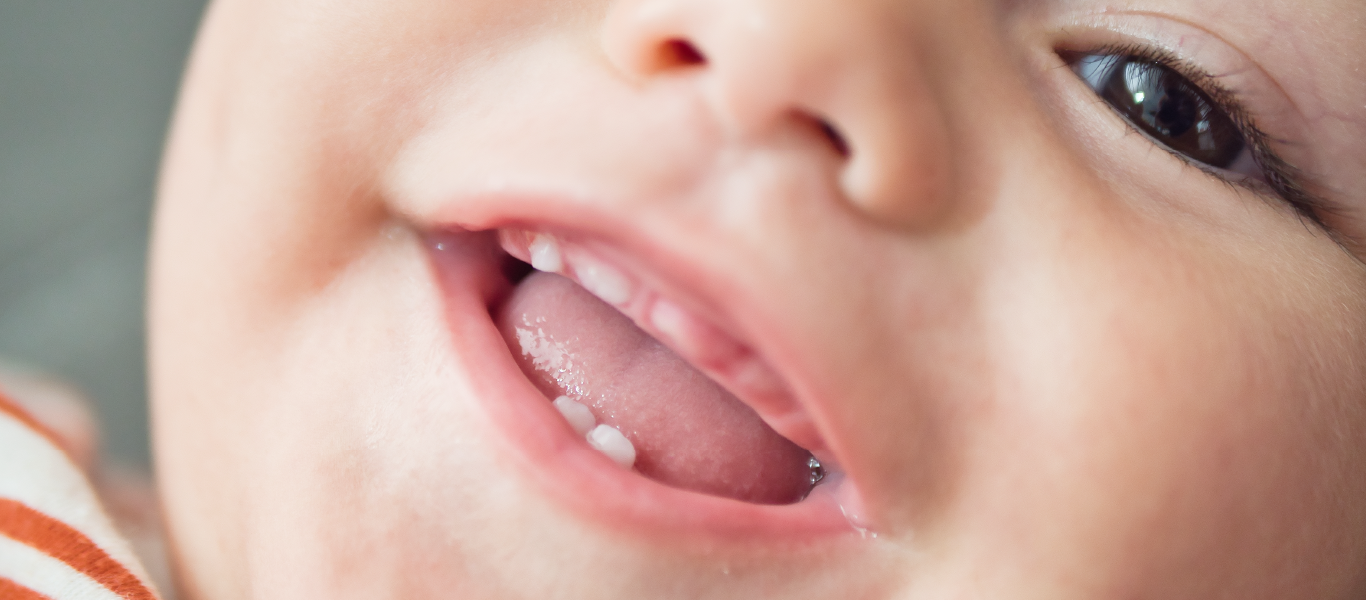
Oral health in childhood is essential for a child’s overall development. Contrary to what many may think, a healthy smile begins early, with the birth of the first tooth.
It is funny to think that, in practice, parents and educators associate the phase of birth and tooth loss with something worthy of calling a tooth fairy to take charge of the process.
Although any fairy brings a canister, and those of the teeth even present, the decision when is the first visit to the dentist, does not depend on any enchanted character, but only on their own parents.
Because it is extremely important, the Order of Dentists (OMD) recommends that this consultation take place after the eruption of the first tooth or at the latest, at the age of 12 months.
The explanation is simple, but we will detail in this article how early follow-up ensures that milk teeth are kept healthy, preventing future problems and also establishes a solid foundation for oral health of the child who will become an adult.
Contents approached
When is the first tooth born?
Tooth growth in childhood is a natural process that begins with the eruption of the first milk teeth around 6 months.
Up to 3 years, the child will have a temporary dentition consisting of 20 teeth. Although temporary, these teeth play an essential role in the development of a child’s mouth and overall health because:
- Help with feeding;
- Facilitate speech;
- They are essential for the correct formation of permanent teeth.
The first visit to the dentist serves to follow, precisely, this development.
What to expect from the first visit to the dentist
During the visit, the dentist checks if the teeth are erupting normally and healthily. If there are any irregularities, such as teeth that are not erupting correctly or signs of cavities, the dentist can intervene early, preventing bigger problems in the future; in other words, it’s a kind of preventive oral health program that allows for the identification of potentially harmful habits.
In this consultation we will advise you to maintain children’s oral health. We do not want you to forget, for example, that the brushing should be carried out by the parents from the eruption of the first tooth, twice a day (one necessarily at bedtime).
Is a children’s dentist appointment just an assessment visit?
Not at all! Precisely because of what we have just said, it is the right time to not only assess babies’ and children’s teeth, but also establish healthy habits early.
At A Clínica Dr. Pedro Mota we follow all medical recommendations to treat children’s oral health.
The truth is that milk teeth, although temporary, need a lot of attention because they are a way to ensure that the child has good oral health throughout his life.
Always be aware that severe dental problems in childhood can lead to invasive and expensive treatments in adolescence or adulthood.
In addition to the necessary dental examination, our dentists advise parents on proper oral hygiene, nutrition and prevention of bad habits such as excessive use of pacifiers or bottles.
- Maybe you don’t know this yet!
Non-nutritional suction habits, such as pacifiers, should be abandoned until about 3 years old, given the possibility of self-correction of disharmonies in the development of dental arches.
The bottle is the habit should be abandoned, ideally, when the child turns 1 year old, and gradual replacement can be done, for example, by the cup with straw or spoon.
And when there are no teeth because they are still babies?
Affection, pampering and care are some of the actions present in the daily life of babies. Therefore, even adult parent bacteria can be transmitted to the baby’s mouth.
So far so good and wrapped in a big dose of love. Perante a inexistência de dentes, os pais devem, contudo, limpar a sua cavidade oral e fazer a correta higiene oral do bebé.
With this action, for which you can use a gauze moistened in water or physiological serum, it is possible to:
- Avoid the accumulation of micro-organisms;
- Clean up the milk residues, for example.
From little ones take care of your boys' teeth
The first visit with the pediatric dentist is a fundamental opportunity to prevent problems that can be more difficult and expensive to treat later.
Now repair as a simple tooth decay, which can develop quickly, when detected in the initial phase, can be treated quickly and easily.
Or even early detection of problems in the tooth structure or alignment can avoid complex and more invasive orthodontic treatments in the future.
Let’s naturalize going to the dentist from a very early age
The first visit to the dentist is an essential step in ensuring a healthy and beautiful smile throughout life.
Regular oral health monitoring from early childhood can prevent a range of future problems, and contribute to the child’s overall well-being.
Now that you’ve read everything, if your child is one of the happy ones with the birth of a tooth, make the first appointment at the dentist. It’s time!
You may be interested in:

I had a dental treatment can I give blood?
Have you had a destartery, extraction, implant or other? Clear the doubt: dental treatment can I give blood? Care to be taken before donation.

Sensitive teeth to ice cream: when should you worry?
Do your teeth feel sensitive to ice cream and even cause you pain? Know when it can be tooth sensitivity and when to schedule an assessment at the dentist.