


Endodontic retreatment: when a devitalized tooth needs new intervention
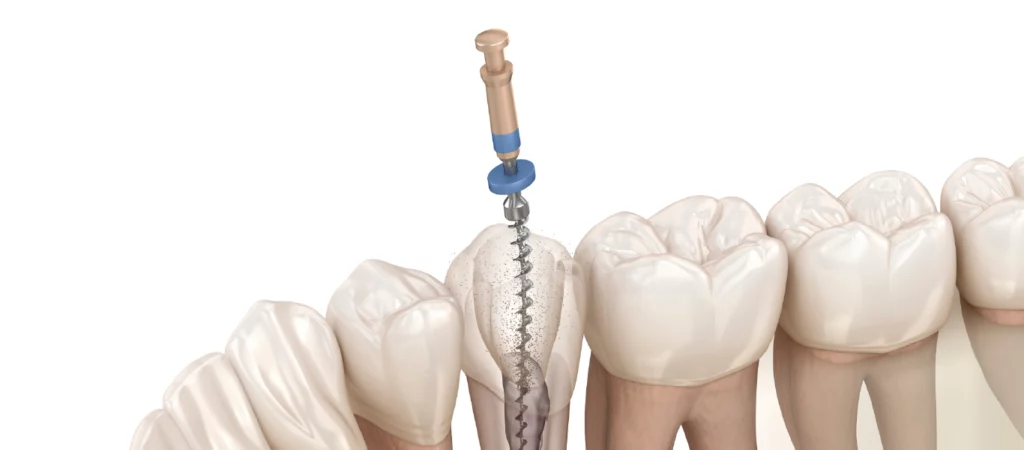
After a canal treatment, many people believe that the problem has been definitively resolved and that an endodontic retreatment is not necessary.
And the truth is that in many cases, it stays. But not always history repeats itself.
There are devitalized teeth that remain stable for years and others that unexpectedly return to cause discomfort.
Sometimes it starts subtly. A slight pressure to chew. Localized sensitivity. A occasionally inflamed gingiva. Small signals that arise intermittently and that many patients end up devaluing for too long.
Until they realize something’s not right. It is precisely in these situations that endodontic retreatment may become necessary, as we will see in this article.
Contents approached
What are the reasons for a problem with a devitalized tooth to return?
Endodontic treatments have very high success rates. Still, the inner anatomy of teeth can be extremely complex and bring an exception to the rule.
There are very thin root canals, curved or difficult to identify, microscopic areas where bacteria can remain silent for a long time and situations where small infiltrations end up again compromising the tooth interior over the years.
In other cases, the problem may arise due to:
- new cavities
- degraded restorations
- bacterial infiltrations
- dental fractures
- contamination of the inside of the canal
The most important thing is to realize that there isn’t always intense pain right at the start. And it is precisely this that leads many patients to postpone the medical assessment.
What are the most frequent signs of the need for endodontic retreatment?
Not all devitalized teeth with problems cause obvious symptoms.
Moreover, it is common for patients to arrive at the clinic convinced that discomfort will eventually disappear on its own, especially when pain only arises while chewing or at certain times of the day.
What patients most commonly report to us is if they have encountered some of these signs:
- Pain when chewing
- Pressure sensation on the tooth
- Localized gingival inflammation
- Appearance of abscess
- Persistent sensitivity
- Discomfort when touching the tooth
- Dental darkening
In some situations, the infection remains completely silent and is only identified through routine radiographic examinations.
That is precisely why clinical follow-up remains important even after a seemingly complete treatment.
What exactly is an endodontic retreatment?
Endodontic retreatment consists of a new intervention performed on a tooth that has already been previously devitalized.
The goal is to remove the material inside the ducts, carefully redisinfect the entire internal structure of the tooth and treat the source of persistent dental infection.
Although many patients associate this procedure with something complex or uncomfortable, the current reality is quite different from the old image linked to canal treatments.
Today, treatments are carried out with more precise techniques and much more rigorous clinical planning, allowing for significantly more conservative and predictable approaches.
Does the retreatment hurt?
This remains one of the biggest concerns for patients experiencing pain in devitalized tooth.
And it’s understandable. Many people still associate endodontic treatments with old experiences marked by discomfort and anxiety.
Currently, the approach is much more controlled. In most cases, the procedure is performed with local anesthesia and techniques that seek to minimize discomfort during and after treatment.
Curiously, many patients describe above all a sense of relief after the intervention, especially when they have been living together for weeks or months with persistent inflammation without realizing exactly the source of the problem.
Why is it important not to wait too long?
When there is an active infection inside the tooth, the problem rarely goes away on its own.
Even when symptoms appear mild, inflammation may continue to be slowly present in the bone and adjacent structures.
Over time, this can compromise tooth stability; bone structure; chewing comfort; gum health; and the prognosis of the tooth itself.
The American Association of Endodontists (AAE) reports that endodontic retreatment may allow preservation of natural teeth which, without proper intervention, might require extraction.
In many cases, early action allows for more conservative approaches and significantly increases the likelihood of preserving the tooth over time.
Is it always possible to save the tooth?
Each case should be carefully evaluated by our specialist dentists.
The possibility of preserving a devitalized tooth depends on several factors such as the extent of the infection; the quality of previous treatment; the amount of existing dental structure; the presence of fractures; and the condition of the surrounding bone.
In many situations, retreatment allows the tooth to remain functional for many years. In others, there may be clinical limitations that require alternative approaches.
That is precisely why a rigorous diagnosis remains one of the most important steps in the entire process.
Preserving the natural tooth remains the best solution whenever possible
Even after a previous canal treatment, many teeth can continue to be recovered through a carefully planned new approach.
And whenever it is possible to preserve the natural tooth, this tends to be the most conservative option to maintain balance, masticatory function and oral stability.
In the blog of A Clínica you can also read about the consequences of tooth loss and the importance of preserving natural structures whenever possible.
More than eliminating temporary symptoms, the real goal is to preserve long-term oral comfort, function, and health.
When should you seek evaluation?
Chewing pain, pressure sensation or recurrent inflammation in a devitalized tooth should not be ignored.
Even apparently mild symptoms may indicate internal alterations that merit proper clinical and radiographic evaluation.
In our dental clinic in Vila Franca de Xira, each case is analyzed individually, with attention to an accurate diagnosis, dental preservation and personalized planning of dental treatment.
Schedule your appointment at A Clínica.
You may be interested in:

Endodontic treatment: does a devitalized tooth hurt?
If after an endodontic treatment the devitalized tooth hurts, could it be a sign that the intervention was not done correctly, or what does it mean? In the middle of all this, where is that eternal question that a decayed tooth never hurts again?

toothache
Ouch! Those who have ever had a toothache often say that it is one of the worst pains you can experience.

Endodontics
There is a light at the end of the tunnel for your tooth and it does not have to be extraction.