


How to choose a dental appliance suitable for me
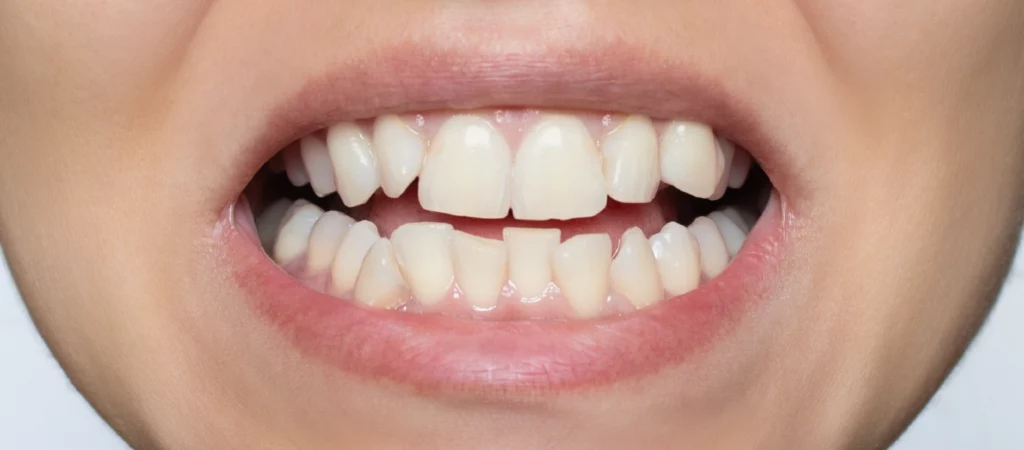
Choosing a dental appliance for aesthetics may seem logical. After all, no one wants to spend months or years feeling that their smile is “stuck” to wires, brackets, or metal parts. But, in orthodontics, what you almost do not see is not always the one that best suits the clinical case, so we decide to talk about how to choose a suitable dental appliance.
Today there are several options: fixed aesthetic device, self-ligating device and transparent aligners. Each of these options has specific characteristics, possible advantages, limitations and indications.
The essential point of this theme is this: the best dental appliance is not necessarily the most discreet, the most modern or the most well-known. It is the one that, after professional evaluation, proves to be most suitable for your case.
In A Clínica Dr. Pedro Mota, the choice of orthodontic treatment is made after a careful and rigorous clinical evaluation, taking into account individual needs, preferences, lifestyle and treatment goals.
Effectively, aligning teeth is not just an aesthetic issue; it’s also a matter of function, oral health, bite stability and confidence.
Contents approached
Before choosing the device, you need to understand the problem
Many patients arrive at the evaluation appointment at the dentist with this formed idea: they want a discreet, comfortable, barely visible device and adapted to their routine. Many want to figure out how to straighten their teeth without using a machine. It’s understandable.
However, the choice should not start with the device – many do not even know what dental devices are called. It should start with diagnosis.
There are simpler cases where the goal is to correct minor misalignments. But there are also more demanding situations, such as dented teeth, diastemas, cross-bite, overbite, open bite, pronatismo or changes in the way the teeth fit together.
The American Dental Association explains that appliances and aligners are devices used to help guide teeth to more correct positions, and may be recommended when there are fitted, spaced, designed teeth or bite changes. That is, orthodontics not only serves to “straighten teeth”; it can also contribute to improving the way a smile works.
So, before asking “what is the most beautiful device?” you should ask: what really needs to be fixed?
The more conventional device that is no longer used at A Clínica
The conventional fixed appliance remains one of the most widely used types of dental appliances in orthodontics. It consists of brackets stuck to the teeth, orthodontic wires and in many cases elastic bands that help apply controlled forces throughout treatment.
The piece stuck to the tooth is called a bracket. The orthodontic wire passes through the brackets and is adjusted by the dentist during check-ups. Through this soft and progressive force, the teeth gradually move to more suitable positions.
Its main limitation is aesthetics and durability, therefore it has ceased to be an option for our experienced orthodontists. Because it is metallic and more visible, it can generate some resistance, especially in adults or in patients who value the image very much on a daily basis. It also requires strict oral hygiene, because the brackets and strands can facilitate plaque buildup when brushing is not done properly.
The conventional fixed appliance is no longer recommended by our customers due to:
- To the long treatment time.
- Patients were fed up with the time that treatment takes, because the strength and movements exerted are slower, which makes treatment more expensive with more controls and visits to the dentist.
The particularities of children’s cases and the use of orthopedic devices.
With regard to children there are still other particularities to consider and it may be necessary to use an orthopedic device, with very specific purposes, as we have seen here.
Fixed aesthetic device: correction with less visual impact
The cosmetic fixed appliance works in a similar way to the conventional fixed appliance, but uses more discrete materials, usually transparent or of tonality close to the color of the teeth.
For many patients, this may be a balanced solution: it maintains the logic of a fixed device but with less visual impact. It can be especially interesting for those who work in contact with the public, communicate daily with customers or simply do not feel comfortable with the appearance of the metal device.
The main advantage is discretion. However, it remains a fixed device. This means that it requires hygiene care, regular consultations and clinical follow-up throughout treatment.
- It is also important not to turn aesthetics into the only decision criterion. A more discreet device may be a good option in certain cases, but it should be chosen because it responds to the diagnosis, not just because you see less...
Self-connecting fixed apparatus: an alternative with its own characteristics
The self-ligating fixed device differs from the conventional device in the way the orthodontic wire is attached to the brackets.
In conventional appliances, the metal wire is usually attached with elastic bands. These elastic bands help keep the wire in place. In the self-connecting device, the brackets have a mechanism of their own, similar to a small cap, which holds the wire without the need for these elastic bands.
This technical difference can bring advantages in certain cases, namely in the way the wire works within the bracket and in the management of applied forces. However, your nomination should always be evaluated individually.
The self-ligating appliance can be considered in different orthodontic situations, including overbite, prongatism, cross bite, diastema, open bite, spiked teeth and other misalignments, when the dentist understands that this option fits the treatment plan.
The American Association of Orthodontists states that there are several treatment options:
- metal appliances
- ceramic appliances
- self-connecting appliances
- clear aligners
However, each has its own uses and benefits. The choice should consider variables such as age, jaw balance, differences in tooth size and specific patient needs.
Still, and from what has been explained so far, it is important to avoid overly simplistic ideas: the self-connecting device is not automatically a faster, more comfortable or better solution for everyone.
The duration and progress of treatment depend on the complexity of the case, the biological response of the patient, the regularity of consultations and the compliance with clinical indications.
Smilers®: transparent aligners for very particular cases
Smilers® is an orthodontic solution with invisible, removable and custom-made aligners. Instead of brackets and wires, the patient uses a sequence of aligners that help promote progressive tooth movements.
Each aligner is slightly different from the previous one. When replaced during treatment, they seek to guide the teeth into the positions planned by the dentist.
The main advantage for many patients is discretion. Because they are transparent, aligners are barely visible. As they are removable, they allow eating without apparatus and facilitate oral hygiene, since the patient can brush his teeth and use dental floss without the presence of brackets or wires.
But this freedom has a requirement: collaboration. Invisible aligners can only meet the intended plan if used as clinically indicated. Withdrawing them too often or failing to meet the recommended daily time may compromise treatment progress.
The Order of Dentists has warned about the importance of invisible aligners being accompanied by a dentist, with technical knowledge and adequate surveillance, as is the case of the specialized team at A Clínica Dr. Pedro Mota.
This idea is fundamental: even when treatment seems simple from the outside, it still involves diagnosis, orthodontic planning and professional control.
After all, how to choose a dental appliance that is the best for your case?
The honest and completely correct and true answer is: it depends.
It depends on the alignment of teeth, type of bite, gum health, age, case complexity, intended aesthetics, patient routine and ability to meet treatment indications…
A patient may prefer Smilers® for discretion, but benefit more from a fixed device for certain movements.
Another may prefer fixed aesthetic apparatus, but have indication for a different approach.
There are also situations in which different solutions can be considered throughout the treatment.
So, the right question is not just “what’s the best device?” The question should be: “what’s the best device for me?”
Do not choose a dental appliance for aesthetics. Choose with diagnosis.
Orthodontics has evolved a lot. Today it is possible to correct the smile with more discreet solutions, more comfortable for some patients and more adapted to different lifestyles. But technology is no substitute for diagnosis!
The right dental appliance must respect oral health, masticatory function, smile aesthetics and desired stability for treatment. Should be chosen based on professional judgment, not just a visual preference or trend.
In A Clínica Dr. Pedro Mota, we have a team of specialized dentists able to evaluate each case individually to help you choose the most appropriate treatment and what is the ideal age for orthodontic device.
The goal is not just to align teeth. It is to seek to improve the function, harmony of the smile and confidence of the patient, with clinical follow-up from the first assessment.
If you are thinking of putting on a dental appliance, the first step is not to choose between metal, ceramic, self-adhesive or transparent aligners.
The first step is to figure out what your smile needs.
Schedule an orthodontic assessment consultation at A Clínica Dr. Pedro Mota and find out which is the most suitable option for your case.
You may be interested in:

I had a dental treatment can I give blood?
Have you had a destartery, extraction, implant or other? Clear the doubt: dental treatment can I give blood? Care to be taken before donation.

Sensitive teeth to ice cream: when should you worry?
Do your teeth feel sensitive to ice cream and even cause you pain? Know when it can be tooth sensitivity and when to schedule an assessment at the dentist.

Child tooth rash: what is normal during the birth of the first teeth?
Talking about child tooth rash, find out when the first teeth are born, what the most frequent symptoms are and when should you seek pediatric dental care.
Endodontic retreatment: when a devitalized tooth needs new intervention
Pain or infection in a devitalized tooth may indicate the need for endodontic retreatment. Learn when a new intervention can save the tooth.