

Gingival recession: why does the gum recede and when should it worry?
Have you noticed that a tooth looks longer than before? Maybe the gum line is different or I started to feel it when drinking cold water.
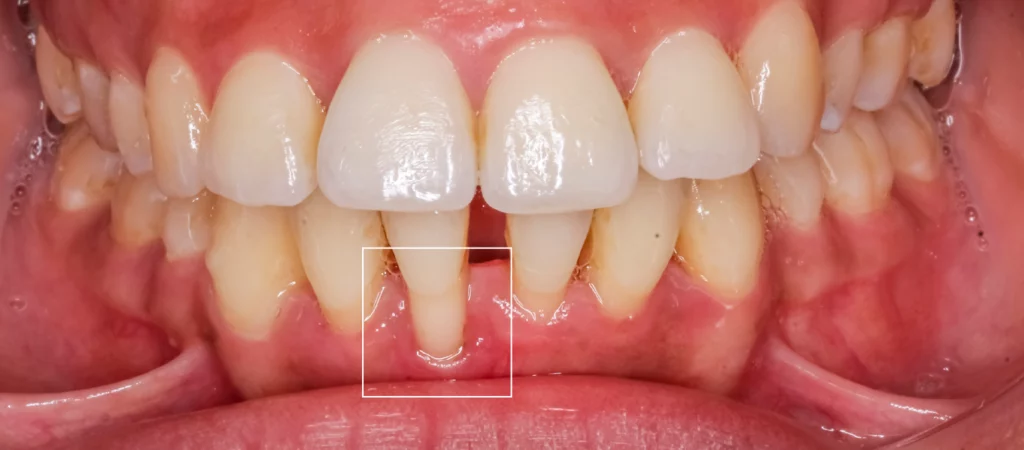
The tooth has not grown. The gum may have receded, leaving a part of the root that was previously covered. This change is called gingival recession.
Although it is often discovered by looking at a smile, the recession deserves attention for other reasons. The exposed root can make the tooth more sensitive and require specific hygiene and follow-up care. The first step is to understand why it happened and whether it is evolving.
Contents approached
How to recognize a gum recession?
The most visible sign is the change in the position of the gum line. A tooth that appears longer than the others or a difference may arise between the gum line of two neighboring teeth.
There may also be sensitivity to cold, brush touch or certain foods. But the absence of pain does not mean that everything is fine: some recessions are identified only in a routine consultation.
Not all tooth sensitivity is caused by recession. Cavities, tooth wear and other problems can produce similar symptoms, so looking at the tooth in a mirror is no substitute for clinical evaluation.
Why does the gum recede?
The gingival recession has no single cause. May be related to the characteristics of the gum tissues, the position of the teeth, periodontal inflammation or local trauma. The way you brush your teeth should also be evaluated, especially if you apply too much pressure or make traumatic movements.
In many cases, several factors coexist. Therefore, assigning the change immediately to the toothbrush or “age” can delay the identification of the actual problem.
Gum recession alone is not a diagnosis of periodontitis. Periodontitis affects the supporting tissues of teeth and requires self-assessment. Likewise, considering that the change is only aesthetic, without examining the gingiva, can make important signs go unnoticed.
When should you schedule an assessment?
It is worth looking for a dentist if you notice that the gum has changed position, especially when:
- The change seems to be increasing;
- Sensitivity or discomfort appeared;
- There is bleeding during brushing;
- Has difficulty cleaning the area;
- One or more teeth appear progressively longer.
These signals do not allow one to conclude by themselves what the cause is. They serve to indicate that the situation should be observed, even if there is no pain.
What happens if the root is exposed?
The root surface is different from the crown of the tooth. When exposed, sensitivity can arise and the area may become more vulnerable to injury, including root caries. The actual risk depends on, among other factors, oral hygiene, diet and individual conditions.
This does not mean that all recessions will aggravate or cause tooth loss. It means that monitoring its evolution and protecting the exposed area can be important.
Can the retracted gum return to normal and cover the tooth?
Naturally, no. But correcting the cause and improving daily care can help control the situation, but this does not mean that the gum spontaneously returns to its previous position.
When there is a clinical indication, periodontal surgery techniques may be considered to improve root coverage or conditions of gingival tissues. Full coverage cannot be promised without assessing the tooth and tissues around it.
There are also situations where surgery is not necessary. The plan can focus on controlling inflammation, adapting oral hygiene, managing sensitivity, and monitoring recession over time.
Should I stop brushing the area?
No. Avoiding toothbrushing can promote plaque buildup near the gum.
The goal is to clean without traumatizing. The technique, pressure applied and type of brush should be adjusted to each person’s needs. If you are afraid to touch the area or feel any sensitivity, ask our specialists for guidance on the consultation instead of not sanitizing it.
A change in the smile deserves an explanation. When to treat gingival recession?
- Gingival recession can start as an aesthetic concern. A tooth looks bigger, the gum line has lost symmetry or the smile has changed. This sign is a good reason to also observe the health of the tissues around the tooth.
At A Clínica Dr. Pedro Mota, in Vila Franca de Xira, periodontal assessment allows you to identify the factors associated with recession and understand whether the best option is to treat, adapt habits or monitor its evolution.
Have you noticed that your gum has receded? Schedule a periodontal assessment. Understanding the cause is the first step in deciding what your case needs.
Seek expert help
Will be evaluated by the specialist dentist in our clinic. We listen to your needs and plan your treatment according to your wishes. In our clinic, we do not sell treatments, we return smiles.
We plan the smile, clarify your doubts and execute with precision.
You may be interested in:

Sensitive teeth to ice cream: when should you worry?
Do your teeth feel sensitive to ice cream and even cause you pain? Know when it can be tooth sensitivity and when to schedule an assessment at the dentist.

Is drinking tea good for your teeth? Benefits, stains and cold sensitivity
Drinking tea is good for teeth and oral health, but also spotting them can stain and show sensitivity to cold. Learn how to protect your smile without giving up the habit.

Tooth sensitivity to cold: why it happens and what you can do to relieve
Tooth sensitivity to cold is one of the most common complaints in oral health and, although it is frequent, should not be ignored.