


Bruxism: the rattling or clenching of teeth is truly frightening. Learn why!
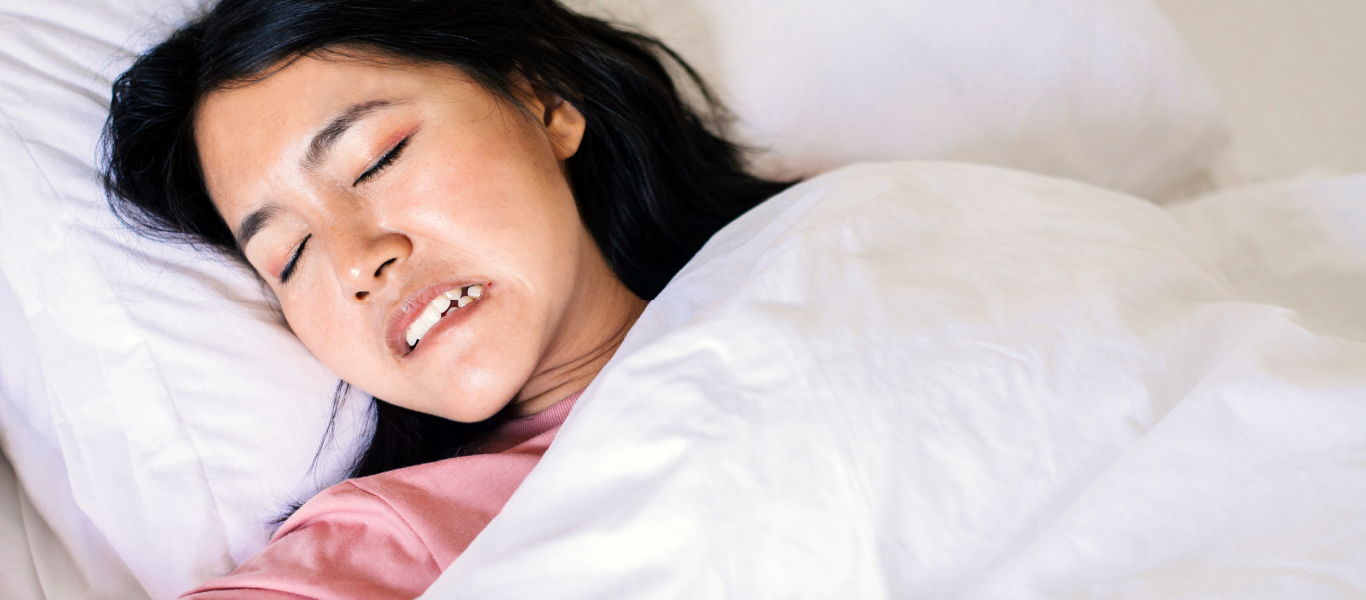
Although it appears to be a word related to ‘witchcraft’, Bruxism is derived from the Greek brychein and refers to the clenching, friction or friction of teeth*.
This condition affects about 15% of the world’s population and is not exclusive to children, manifesting itself therefore regardless of age.
In this article, we will discover how Bruxism and sleep apnea are linked and how the absence of incisor teeth can aggravate the problem.
In addition to addressing the symptoms of Bruxism, you will learn how it can act in treating these conditions that can severely affect your quality of life.
Contents approached
What is Bruxism and when does it occur?
It is a condition characterized by involuntarily clenching or gnashing teeth.
O paciente pode não saber que tem este hábito, sobretudo se se manifestar no período noturno, enquanto dorme – o Bruxismo noturno.
For its part, daytime Bruxism is that which occurs during the day, in these cases the movements are associated with an involuntary habit or “tics”.
That is why many patients take years to discover this problem, while others are diagnosed at an early stage in routine consultations.
7 symptoms that may indicate that you suffer from Bruxism
Curiously, not all symptoms of this pathology are in the mouth, and there is a multidisciplinary contribution to identify this problem. However, you should consult our specialist dentists in case of:
- 1. Grind or clench your teeth tightly.
- 2. Find the tongue or cheeks with marks or bites.
- 3. Dentary sensitivity.
- 4. Pain or discomfort in the face muscles.
- 5. Frequent headaches and earache.
- 6. Sleep disorders.
- 7. Teeth that are becoming misaligned in adulthood.
Are we playing the cause and/or consequence?
The truth is that the causes of Bruxism are not known, concretely!
However, it is thought that stress and anxiety may be the main triggers of this disorder.
Additionally, drugs, alcohol, tobacco and some psychiatric medications may also worsen or accompany bruxism.
To these we can add others such as: neurological disorders (e.g. Parkinson’s disease, epilepsy), gastroesophageal reflux, medications (e.g. some antidepressants) and excess coffee.
Bruxism can lead to serious problems, such as:
- Tooth wear and fractures;
- Hypertrophy or further development of the muscles involved in chewing, and often inflammation of these muscles can occur;
- Excessive tooth sensitivity;
- Problems in the temporomandibular joint (ATM);
- Headaches and muscle tension in the face;
- Sleep disorders: ressonar or sleep apnea*.
Sleep apnea and Bruxism: a frighteningly likely combination
Sleep apnea is a respiratory disorder that causes temporary interruptions in breathing during sleep, resulting in loud and frightening snoring.
Effectively, many people who suffer from sleep apnea also have Bruxism. This is because toothbrushing episodes may be directly related to the effort to keep the airway open during breathing breaks.
And don’t you think there are no vampires since we talked about Bruxism?
Buh. It’s true! The absence of upper central incisors (11 and 21), often referred to in slang as the appearance of “vampire teeth”, also ends up being part of this problem.
These teeth are essential for the aesthetics of the smile, but still for the masticatory function.
Lack of them can aggravate Bruxism since the absence of adequate support may lead to excessive pressure on remaining teeth and temporomandibular joints.
Don’t despair because there are ways to ameliorate this problem:
- Enjoy relaxation
The relaxation tube is a kind of prosthesis that is positioned to prevent contact between teeth.
It is made by a “mold” designed to the measure of Bruxism. Thus, if performed this treatment correctly, it will minimize the pressure and friction between teeth. This will prevent tooth wear and relax the jaw.
- Replacement of missing teeth
Replacement of missing incisors by dental implants or prostheses can restore the correct function of the bite and help prevent complications associated with bruxism and sleep apnea (which can be treated with a CPAP).
Note that children of parents with bruxism are more likely to be affected, even if genetic markers are not known.
In any case, it is not normal for children to grub their teeth and should seek the help of a specialist to assess the cause.
Bruxism, sleep apnea and toothlessness are conditions that can coexist in a complex way because they affect oral health and quality of life in general.
The only way to make an accurate diagnosis and ensure the choice of the most appropriate treatment, schedule a consultation with our medical specialists.
Additional information at:
* Order of Dentists: Oral Health and Sleep
You may be interested in:

I had a dental treatment can I give blood?
Have you had a destartery, extraction, implant or other? Clear the doubt: dental treatment can I give blood? Care to be taken before donation.

Sensitive teeth to ice cream: when should you worry?
Do your teeth feel sensitive to ice cream and even cause you pain? Know when it can be tooth sensitivity and when to schedule an assessment at the dentist.